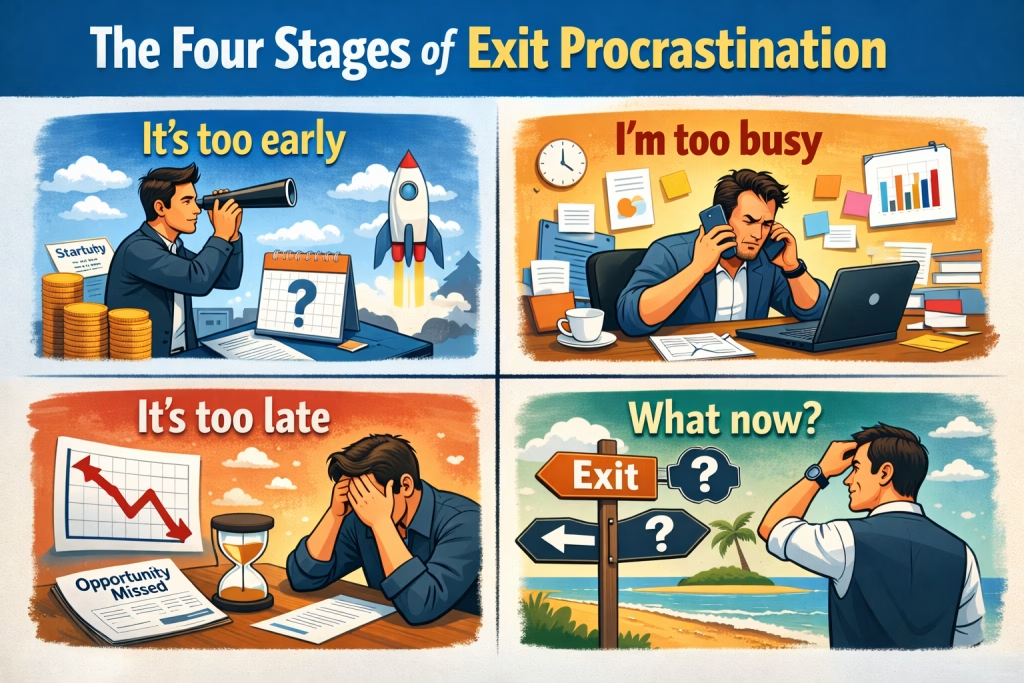
I was having a chat with some founders today and felt it was timely to revisit our 4-stage Exit Procrastination model. It’s a bit tongue in cheek – but based on our real-world observations.
We’ve seen many founders go through the same four stages. And at each stage, they find a perfectly rational reason to postpone the exit conversation or the exit planning.
“It’s too early”
“I haven’t even found product-market fit yet.”
“We’ll probably pivot three times before we know what we’re actually building.”
“What’s the point of exit planning when I don’t even know if this business will survive?”
These are the most common responses when we mention exit planning to early-stage founders. And they sound perfectly reasonable.
They’re also completely wrong.
Here’s the confusion: you’re thinking we’re asking for a detailed exit plan. We’re not. We’re asking for a strategy.
Actually, two strategies. One for the business. One for you.
Your personal exit strategy should be your starting point.
What kind of exit would actually make you happy? Not financially. Personally.
Are you optimising for maximum valuation, fastest timeline, keeping the team together, maintaining control, building something you’re proud of, or something else entirely? These aren’t details to figure out later. They’re strategic parameters that should inform how you build from day one.
If you want to exit to a strategic acquirer who’ll scale your vision, you build differently than if you want to sell to your management team in ten years. If you want financial independence by 45, you make different choices than if you want to build a legacy business. If keeping your team together matters more than the cheque size, that changes everything about how you structure and grow.
And here’s the question almost no founder asks early enough: Who am I without this business? What do I actually want my life to look like after exit?
These answers don’t change when you pivot. They’re about you, not your product. But if you don’t answer them early, you’ll spend years building towards an exit that doesn’t actually serve your life. You’ll optimise for a transaction without ever asking what you’re transacting towards.
Keep your business exit strategy strategic.
about understanding the broad direction and understanding the strategic implications of every decision you make. You’re building out your personal strategy through the business lens. Setting the broad direction of the business. Remember that not every business has to seek investment and sell – a point that is overlooked all too often.
It should also guide you through every decision, particularly the ones that might seem trivial at the time.
When you give that helpful investor 15% with “standard terms,” do you understand what liquidation preferences actually mean in an exit scenario? When you split equity 50/50 with your co-founder because it feels fair, have you thought through what happens when one person does 80% of the work? When you hand out advisory shares to “really helpful people,” do you know what a messy cap table does to your attractiveness to acquirers?
When you’re building a family business, have you actually asked your children if they want it? Or are you assuming they’ll take over whilst they’re quietly planning careers in something completely different?
When you’re developing a management team, are you building people who could buy you out, or creating dependencies that mean the business collapses without you? When you’re bootstrapping with the dream of keeping control, do you understand that buyers pay significantly less for businesses that can’t run without the founder?
When you take on debt to fund growth, have you considered what that does to your exit options? When you sign that ten-year lease on fancy offices, have you thought about what it means if you want to exit in five? When you build your entire business model around your personal relationships and reputation, what exactly are you planning to sell?
These aren’t mistakes. They’re strategic decisions made without strategy. And they don’t reset when you pivot. Your business model will change five times. Your product will evolve constantly. But your cap table structure? Your governance documents? Your IP assignments? Those compound.
A business exit strategy means asking one simple question before every major decision: “How does this affect my options later?” Not in a paranoid way. In a strategic way. Because every choice either opens doors or closes them.
So no, you don’t need a detailed exit plan when you’re pre-PMF.
But you absolutely need two strategies: one that keeps your business exit options open, and one that ensures the exit you eventually get is one you actually want.
The founders who say “it’s too early” usually mean “it’s uncomfortable to think about.” And they’re right. It is uncomfortable. But uncomfortable now is better than catastrophic later.
Because the decisions you’re making today, the ones that feel too early to worry about? They’re already determining whether your exit happens on your terms or someone else’s.
“I’m too busy”
Now you’re cooking. Revenue is climbing, team is growing, investors are happy. Exit planning feels like a distraction from the very thing that will make the exit valuable.
But here’s the pattern we see most often:
“This urgent operational issue just cropped up. Once we’ve sorted the supply chain problems, I’ll focus on exit planning. Next quarter will be better.”
Next quarter arrives. The supply chain is fixed. But now your biggest client is threatening to leave unless you custom-build a solution. You put out that fire. Tell yourself: “Once we’ve retained this client and stabilised revenue, then I’ll think about exits. Next month will be quieter.”
Next month. Client retained. Revenue stable. Except your finance director just handed in notice and you need to recruit urgently. “Once we’ve got the new FD settled in, I’ll carve out time for the strategic stuff.”
Six months later. New FD onboarded. And just when you thought the dust had settled, your main competitor launches a product that threatens your market position. Now you’re firefighting again. “Once we’ve responded to this competitive threat…”
Twelve months pass. Then eighteen. Then three years.
And you’re still telling yourself that next quarter will be quieter.
It won’t. There will always be an urgent operational issue. Always a fire that needs putting out. Always a reason why now isn’t quite the right time.
The irony? This is when buyers are watching. Your infrastructure choices, customer concentration, key person dependencies. They’re all being baked in whilst you’re “too busy” to think about them.
That client you’re bending over backwards to retain? Buyers see revenue concentration risk. That custom solution you built? They see unsustainable complexity. That finance director you can’t replace? They see key person dependency. That competitor response that consumed six months? They see reactive strategy rather than defensible moat.
You’re so busy building the business that you’re accidentally destroying its exit value.
And you’re still not asking yourself the personal questions: what happens to your identity when this exits? What relationships have you sacrificed? What do you actually want your life to look like?
You’re optimising for a transaction you haven’t even thought through.
“It’s too late”
Then something changes. And suddenly it’s not theoretical anymore.
Sometimes it’s external. A credible buyer makes an approach. A competitor wants to acquire you. Your investors are pushing for liquidity. The data room request arrives and you’re scrambling.
Sometimes it’s personal. Your health gives you a warning you can’t ignore. Your energy for the daily grind just… runs out. Your spouse sits you down and says “I need you to choose: the business or us.” You wake up one morning and realise you’ve been running on empty for three years and you simply can’t do another quarter like the last one.
Sometimes it’s the business itself. You’ve surprised yourself with growth and it’s now too big for you to run but too small to afford the leadership team it needs. You’re the bottleneck in every decision and you know it. Or the opposite: you’ve plateaued and you’re facing the choice between reinvesting everything to break through or exiting whilst there’s still value to sell.
Whatever the trigger, you’re now making the biggest decision of your professional life under pressure, and you’re completely unprepared.
That IP assignment you meant to sort? Missing. That customer contract from year two? Verbal. That shareholder who left in 2019? Still technically owns 8%. That documentation you were going to “clean up when we’re less busy”? Still a mess of spreadsheets and tribal knowledge. That succession plan for your role? It doesn’t exist because you are the business.
You’re now negotiating from weakness, racing to clean up years of “we’ll fix it later,” and making the biggest financial decision of your life under pressure whilst simultaneously realising you have no idea what you actually want from the next chapter.
The things that seemed insignificant when you were “too busy”? They’re now six-figure problems in your negotiation. That concentrated customer base? It just knocked 30% off your valuation. That undocumented IP? The buyer’s lawyer is having a field day. That key person dependency? You’re now locked into a three-year earn-out whether you like it or not.
And the personal side? You haven’t thought about it at all. Who are you without this business? What will you do on Tuesday morning? What relationships need rebuilding? What actually matters to you beyond the number on the term sheet?
You’re about to exit, and you have no idea what you’re exiting towards.
“What now?”
The deal closes on Friday. Monday morning you wake up and… nothing. No emails that matter. No decisions to make. No fires to fight.
Some founders describe it as relief. Most describe it as terror.
The identity you spent 15 years building? Gone. The purpose that got you out of bed? Vanished. The relationships you sacrificed along the way? Still broken, but now you’ve got time to notice.
And that earn-out you agreed to? Turns out it’s not passive income. It’s handcuffs.
This is the stage where founders ring us and say “I wish I’d thought about the personal side years ago.” Because they optimised for maximum exit value without ever asking: exit to what?
Getting It Right
The founders who navigate exits well, who actually end up happy, not just wealthy, didn’t have the biggest exits or the cleanest processes.
They had something else: they treated their exit as a transition they were designing, not an event that happened to them.
They thought about it when it felt premature. They built with transferability in mind when they were “too busy.” They knew their walk-away number AND their walk-towards vision. They asked the personal questions early: Who am I without this business? What do I actually want? What matters more than the money?
And critically: they didn’t wait until “the right time” to plan. Because there is no right time. There’s only time you decided to take back from the urgency of today.
Does This Resonate?
Hopefully you’ve had a quick chuckle, and you haven’t fallen into any of these traps. But in our experience founders are smart enough to spot the problems from afar. But when you’re in the thick of it, building your own business – you may not notice this happening. The Cobbler’s Children revisited.
At Exitologists, we help founders at every stage work through both the business mechanics and the personal transition. Not because we’ve always got it right ourselves, but we’ve been there. We’ve been at every one of these stages. We’ve made the mistakes, so you don’t have to.
And we’ve learned that the best exits aren’t the ones that maximise value. They’re the ones that were designed intentionally, with eyes wide open about what you’re building towards. What works for you, your family, your team and your legacy.