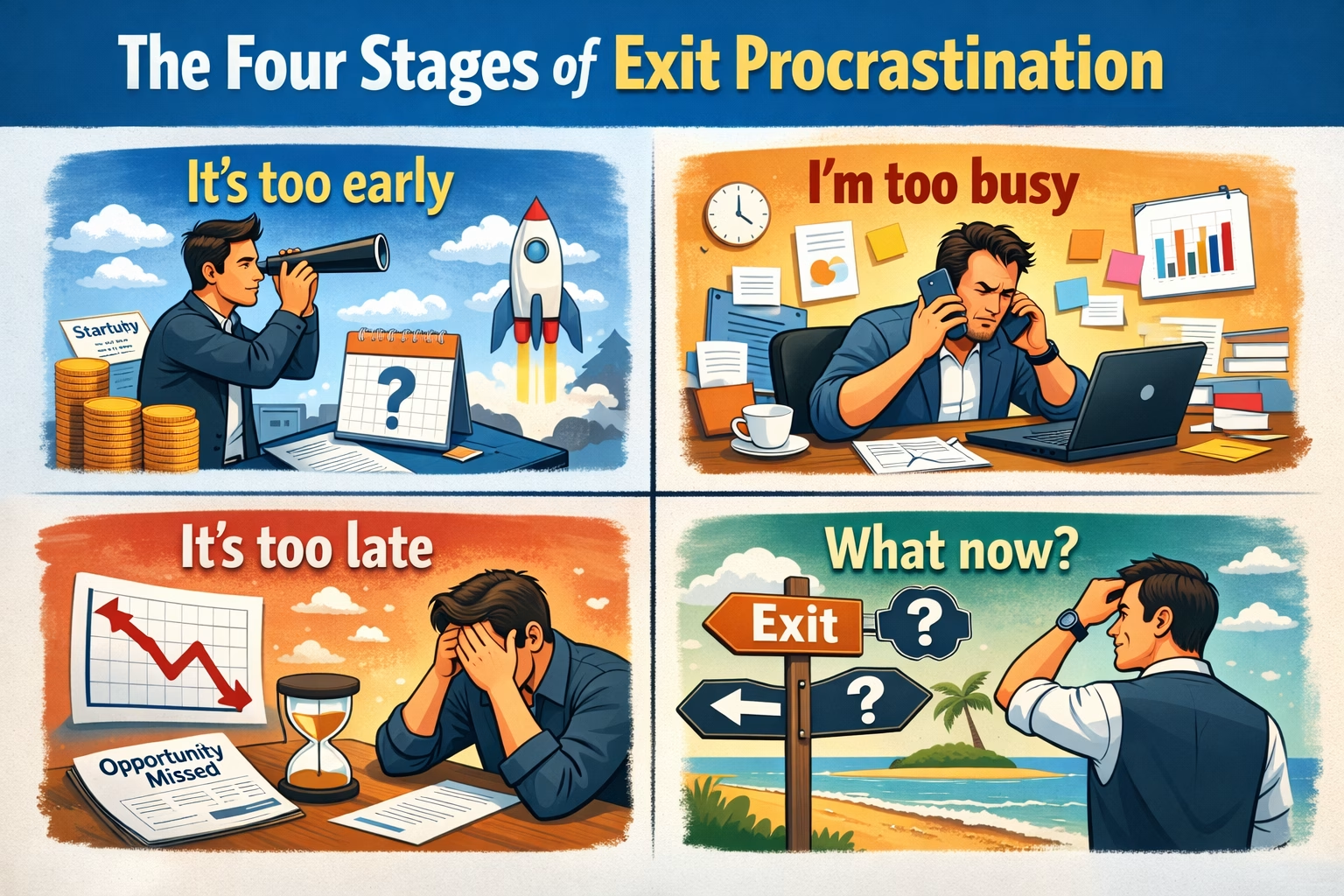

The average business exit takes 18-24 months to complete. That’s 18-24 months of planning, research, getting your house in order, not to mention due diligence, negotiations, legal work, and financial planning. Advisors crawl through every detail of your business. Accountants model scenarios. Lawyers review warranties. Nothing is left to chance.
How much time have you spent planning what happens to you?
If you’re like most founders, the answer is somewhere between “not much” and “absolutely none.” You’ll spend two years preparing your business for sale and precisely zero time preparing yourself for life after. Then you’ll join the 75% who experience profound regret within a year, wondering why nobody warned you.
We’re warning you now.
The Cliff Edge vs. The Glide Path
Most founders approach exit like jumping off a cliff. One day you’re the founder, fully operational, solving problems, leading the team, driving strategy. The next day you’re not, you find a prospective buyer (or they find you) and everything kicks off. Before you know it you’ve signed the papers, taken the money, and stepped away. Okay I know there is often a handover or earn-out period – but even then you’ve lost control of the business – you’ve stepped away from ownership and stepped into employment.
You will feel like you’re playing “catch up” for most of the time.
The alternative is what we call the glide path approach; a deliberate, staged transition that prepares you for life after exit whilst you’re still building towards it. It’s not about taking your foot off the gas or losing focus on the business. It’s about recognising that your personal readiness matters as much as your business readiness.
Research consistently shows that founders who plan their personal exits alongside their business exits report significantly higher satisfaction post-exit. They’re less likely to experience depression, relationship breakdown, or that profound sense of loss and purposelessness that catches so many by surprise on Tuesday morning.
The difference? They started early. Not six months before signing, not even a year before. They started the personal work 2-3 years out, building the foundations of their post-exit life whilst still running the business.
From Strategy to Plan
Most of us didn’t do that. We were too busy building, too focused on survival, too caught up in the day-to-day grind to think about the endgame. And that’s fine, that’s reality for most founders.
In an ideal world, you’d have created your personal exit strategy before you even started your business. You’d have known from day one what you wanted the exit to look like, not just for the company but for yourself. What you wanted to achieve. What success really meant. What you’d do when the journey ended.
But if you did have some version of a personal exit strategy when you started, even if it was just a vague sense of “I want to build this, sell it, and then…”, now is the time to dust it off and look at it properly. Because whatever you thought back then almost certainly needs updating.
You’re not the same person who started this business. Your life has changed. Your relationships have evolved. Your priorities have shifted. The version of success you imagined a decade ago might not be what success looks like to you now. And that half-formed idea of what you’d do “after” probably hasn’t survived contact with reality.
So this isn’t about creating a personal exit strategy from scratch (though if you need to, that’s fine). It’s about taking whatever strategy you have, explicit or implicit, detailed or vague, and turning it into a concrete, actionable plan with real timelines, specific milestones, and honest assessment of where you actually are versus where you need to be.
Strategy is “I want to exit and spend more time with my family.” Plan is “I will reduce my working hours by 20% starting in month six, establish a standing date night every Thursday, commit to being home for dinner four nights a week, and use my freed-up time to rebuild relationships that have suffered whilst I’ve been building the business.”
The timeline below is designed to help you bridge that gap, to take whatever exit strategy you have and turn it into something real. Something you can actually execute. Something that means Tuesday morning won’t be a crisis.
Here’s how to do it properly.
The Three-Year Personal Exit Timeline
This timeline assumes you’re starting roughly three years before your planned business exit. If you’re closer than that, you’ll need to compress the timeline, but don’t skip the steps. Each stage builds on the previous one, and rushing through them is how founders end up unprepared.
Year Three: Foundation and Awareness
This is when most founders haven’t even started thinking about exit seriously. The business is performing, there’s still work to do, and exit feels like something for “future you” to worry about. Which makes it the perfect time to start the personal work, precisely because it doesn’t feel urgent yet.
The Identity Work
Start by asking yourself an uncomfortable question: who are you when you’re not the founder? Not who you’ll be after exit (you don’t know yet), but who you are right now beyond your business role. This isn’t a quick exercise. It requires real introspection, and probably some therapy or coaching if we’re being honest about what works.
Begin keeping a journal. Not about the businesabout yourself. What energises you? What drains you? When do you feel most alive, most yourself? Not in the founder role, but as a human being. The answers might surprise you. They surprised me. Turns out I’d spent so long being “the founder” that I’d genuinely forgotten who I was underneath.
Start experimenting with interests outside the business. Not because you’re bored or need a hobby, because you need to rebuild parts of yourself that have atrophied whilst you’ve been building the company. Take that pottery class your partner’s been suggesting. Join the cycling club. Start learning a language. The specific activity matters less than the act of doing something that has nothing to do with your business identity.
The Relationship Conversations (Part 1)
This is when you plant the seeds. You’re not announcing you’re selling up, you’re opening a conversation about the future. Casual at first. “I’ve been thinking about what the next chapter might look like.” “Where do you see us in five years?” These aren’t hypotheticals. They’re reconnaissance missions.
Pay attention to your partner’s responses. Really listen. They might have very different expectations than you do about what life looks like after exit. Better to discover that now, when you’ve got time to navigate it, than six months before you sign the papers.
If you have adult children who’ve assumed they’d take over the business, this is when you start managing those expectations too. Gently. Carefully. But definitely.
The Time Architecture Experiments
Start testing what happens when you’re not in the business 24/7. Take a proper holiday. Not the kind where you check emails from the beach, the kind where you completely disconnect for two weeks. See how that feels. See how the business copes without you.
If it feels uncomfortable (it will), that’s data. If you can’t switch off (you probably can’t), that’s data too. If the business struggles without you for a fortnight, that’s a business problem that needs fixing before you even think about exit. And if you struggle without the business, well, that’s exactly why we’re doing this three years out.
Milestone Check: By End of Year Three
You should have begun the identity work, started exploring interests outside the business, opened initial conversations with your partner about the future, and tested periods of disconnection. You’re not looking for answers yet, you’re gathering data about yourself and your readiness.
Year Two: Building and Testing
You’re now roughly two years out from exit. The business work is probably starting to ramp up, engaging advisors, getting financials in order, addressing gaps in the business. This is precisely when most founders stop thinking about the personal side because they’re “too busy.”
Don’t make that mistake.
Financial Reality Check
This is when you do the actual numbers on what you need versus what you think you need. Not the business valuation, you’ve got advisors for that. The lifestyle audit. What do you actually spend money on? What will change post-exit? What new costs will emerge?
Work with a financial planner who specialises in sudden wealth transitions (yes, they exist, and yes, you need one). Model different scenarios. What if the exit number is 30% lower than you’re hoping? What if earn-outs don’t materialise? What does “enough” actually look like for you and your family?
This is also when you start thinking about what you’ll do with your money beyond “have it.” Charitable interests? Family legacy planning? Investment portfolio? These aren’t just financial questions, they’re purpose questions. Money without purpose is just numbers in an account.
Purpose Discovery
By now you should have a better sense of who you are beyond the founder role. The question shifts to: what do you wantto do with the rest of your life? Not what you think you should want. Not what looks impressive on LinkedIn. What actually excites you enough to get out of bed on Tuesday morning when nobody needs you anymore.
This is when you start testing those ideas properly. Volunteer with that charity you’ve been meaning to support. Take on a non-exec role with a company in a sector that interests you. Write that book proposal you’ve been thinking about. Mentor some younger founders. None of this needs to be “the answer”, you’re exploring, testing, seeing what resonates.
The founders who struggle most post-exit are the ones who can’t imagine doing anything other than what they’re doing now. If you’re one of them, this is your wake-up call. You’ve got two years to find something that matters to you beyond this business. Use them.
Relationship Conversations (Part 2)
The conversations get more concrete now. You’re not talking in vague five-year terms anymore, you’re talking about actual plans. What does life look like when you’re not working 60-hour weeks? Where will you live? How will you spend your time? What are your partner’s expectations?
This is when misalignments surface. Your partner thinks exit means you’ll finally spend more time together. You think exit means you’ll finally have time to start that new venture you’ve been planning. These aren’t small differences, they’re relationship-ending ones if you don’t address them now.
If you’ve got young children, think about what your presence means. If you’ve got teenagers, think about what your sudden, constant presence might mean (they’ve adapted to you being absent; your full-time attention might not be the gift you think it is). If you’re planning to move house or relocate, everyone needs to be part of that conversation.
The Trial Run
This is the big one. You need to test what reduced involvement feels like, not a fortnight’s holiday, but an extended period of genuinely stepping back. Three months is ideal if you can swing it. Six weeks minimum.
Delegate more than feels comfortable. Let your team make decisions you’d normally make. See what happens when you’re not the one solving every problem. This serves two purposes: it stress-tests whether your business can run without you (critical for a successful exit), and it shows you what your life feels like without the business consuming it.
Some founders love it. The relief, the space, the freedom to think about other things. Others hate it. The boredom, the irrelevance, the loss of purpose. Both reactions are useful information. If you hate it, you’ve got time to work on why. If you love it, you’ve got confirmation that exit is the right path.
Milestone Check: By End of Year Two
You should have a clear financial picture of what you need, you should have started testing potential sources of post-exit purpose, your family should understand what’s coming, and you should have completed a trial run of reduced involvement. You’re building the foundations of your post-exit life whilst still operating the business.
Year One: The Transition Year
You’re now in the final 12 months before exit. The business side is probably intense, negotiations, due diligence, legal processes. This is when founders typically abandon all personal planning because they’re overwhelmed with transaction work.
This is also exactly when you need to intensify the personal work, not abandon it.
Gradual Disengagement
Start reducing your operational involvement systematically. Not because you’re checked out (that’ll damage the exit), but because you’re preparing for a staged transition. Move from working in the business to working on it. Shift from being the person who solves problems to being the person who develops problem-solvers.
This isn’t just for your benefit, it’s essential for the business. Buyers want to know the company isn’t entirely dependent on you. But it’s also your rehearsal for exit. Each responsibility you hand over is practice for the final handover.
Track how this makes you feel. Relieved? Anxious? Irrelevant? Energised by the freed-up time? All of the above? These emotional responses tell you what you need to work on before exit.
Building the New Routine
You should be actively building your post-exit life now, not waiting until after exit to figure it out. That means regular commitments to activities, interests, or pursuits that have nothing to do with the business. Schedule them. Protect them. Treat them as seriously as you’d treat a board meeting.
This might be three mornings a week at the gym. A standing commitment to that charity board. Dedicated time for that writing project. Regular days with your children. Whatever you’ve identified as important in your post-exit life, you need to be doing a version of it now. The mistake is thinking you’ll suddenly become that person after exit. You won’t. You become that person by practicing being that person whilst you still have the business as a safety net.
The First 90 Days Plan
By now you should know roughly when the exit will complete. Create a specific, detailed plan for the first 90 days after. Not “I’ll take some time to decompress” (that’s a recipe for drift). Actual plans. Concrete commitments. Specific activities.
Week one might be genuine rest and celebration. Fine. But weeks two through twelve? What are you actually doing? Who are you spending time with? What projects are you working on? The founders who navigate post-exit successfully are the ones who had answers to these questions before they signed the papers, not after.
The Final Conversations
Three to six months before exit, have the final round of conversations with your family. Everyone should know what’s happening, when it’s happening, and what it means for them. The surprises should already be addressed. The expectations should be aligned. You’re not breaking news anymore, you’re confirming plans you’ve been building together for the last two years.
If there are still major misalignments at this point, you’ve got a problem. Either you haven’t been having the right conversations, or you’ve been having them but not really listening. Either way, you need professional help (a therapist, a coach, a mediator) to work through it before you sign anything.
Milestone Check: By End of Year One
You should be operationally less involved in the business, you should have an established routine that includes post-exit activities, you should have a concrete 90-day plan, and your family should be fully aligned on what’s happening. The transition should already be underway, exit is just the legal completion of a process you’ve been living for months.
The Final Months: Preparing for Tuesday
As you enter the final few months before exit, the business work intensifies. Legal reviews, final negotiations, completion accounts. You’ll be busy. But don’t let that distract you from these final pieces of personal preparation.
Mental Health Check-In
How are you actually feeling? Not how you think you should feel, not how you’re telling everyone you feel. How are you really? If you’re anxious, depressed, or struggling, that’s not weakness, that’s information. Get support now. Talk to a therapist. Join a founder peer group. Don’t wait until Tuesday morning when you’re in crisis.
Support System Activation
Line up your support network before you need it. That might be a therapist, a coach, a peer group of founders who’ve exited, or just mates who’ll check in on you regularly. The time to build this infrastructure is before exit, not after. When Tuesday morning arrives and you’re struggling, you need to know who to call.
Escape Routes and Safety Valves
What’s your plan if it all goes wrong? If the relationship with the buyers sours during an earn-out? If you hate being retired? If your marriage hits crisis point? I’m not suggesting you’ll need these, but having thought through contingencies means you’re less likely to panic and make bad decisions when you’re vulnerable.
The Realistic Expectations Conversation
Have one final conversation with yourself (and your partner, if relevant) about expectations. Exit won’t fix your marriage if it’s broken. It won’t suddenly make you happy if you’re depressed. It won’t give you purpose if you don’t have any. Money is an amplifier, it makes good things better and bad things worse. If there are underlying issues in your life, address them now. Exit will expose them, not solve them.
Why This Timeline Matters
Here’s what we’ve learned from our own experiences and from dozens of founders who’ve gone through this process: the ones who exit successfully, truly successfully, not just financially, are the ones who treated their personal exit with the same seriousness as their business exit.
They started early. They did the uncomfortable identity work. They had the difficult conversations with their families. They tested what reduced involvement felt like. They built their post-exit life whilst still running the business, so the transition was a glide path rather than a cliff edge.
And yes, it’s hard to do this whilst also building towards a successful business exit. You’re already stretched thin, already working harder than you probably should be. Adding personal exit planning on top feels like one more impossible demand on your time.
But here’s the thing: this work isn’t separate from the business exit. It’s part of it. Your readiness to exit, genuinely, personally ready, affects everything from your negotiating position to your willingness to walk away from bad deals to your ability to actually enjoy the outcome.
The founders who rush the personal side because they’re “too busy” are the ones who end up wealthy but lost, successful but miserable, free but purposeless. They spent two years planning the transaction and zero time planning the transition. And they paid for it.
What If You’re Closer Than Three Years?
If you’re reading this and thinking “I’m only 12 months out, I don’t have three years,” don’t panic. You can compress this timeline, but you mustn’t skip the steps.
Focus on the essentials first. Start the identity work immediately, even if it feels rushed. Have the relationship conversations now, even if they should have happened earlier. Create that 90-day plan, test reduced involvement however you can, and get professional support lined up. It won’t be perfect, but it’s infinitely better than doing none of it.
And if you’re less than six months out? Be brutally honest with yourself about whether you’re actually ready. Just because the business is ready doesn’t mean you are. Sometimes the hardest decision is delaying an exit that looks perfect on paper because you know you’re not prepared for Tuesday morning.
I’ve seen founders delay exits by 6-12 months specifically to do this personal work. In every case, they were glad they did. The extra time made the difference between exiting to crisis and exiting to freedom.
Why You Shouldn’t Just Download This and Go It Alone
You might be thinking: “Right, I’ve got the timeline, I’ve got the checklist, I’ll just work through it myself.” And look, you’re a founder, you’ve built a business from nothing, solved impossible problems, figured things out as you went. You’re capable, resourceful, and used to doing hard things alone.
But here’s what we’ve learned the hard way: this is different.
The Blind Spot Problem
When you’re inside your own life, inside your own business, you can’t see the patterns you’re trapped in. You can’t identify the assumptions you’re making. You can’t spot the ways you’re fooling yourself about your readiness.
I thought I was ready for my exit. I’d ticked all the boxes. I had plans. I had interests. I’d had conversations with my family. On paper, I was sorted. In reality, I was a mess within six months. Why? Because I couldn’t see my own blind spots. I couldn’t hear what my partner was actually saying versus what I wanted to hear. I couldn’t recognise that my “hobbies” were just displacement activities, not genuine sources of purpose.
You need someone outside your situation who can see what you can’t. Someone who’ll ask the uncomfortable questions you’re avoiding. Someone who’ll call you out when you’re lying to yourself about being ready.
The Emotional Labour Problem
Working through this timeline isn’t just a cognitive exercise. It’s emotionally exhausting. You’re confronting your identity, your relationships, your mortality, your purpose. You’re having difficult conversations with your partner. You’re admitting that the thing you’ve built your life around is coming to an end.
Founders are brilliant at compartmentalising emotions to get things done. It’s how you’ve survived this long. But that same skill becomes a liability when you need to actually feel things, process them, and work through them. You can’t compartmentalise your way through personal exit planning.
Having someone to hold that emotional space, someone who’s been through it, who knows what it feels like, who won’t let you skip the hard bits, makes the difference between surface-level planning and actually doing the deep work.
The Accountability Problem
Be honest: how many business goals have you set for yourself that you’ve actually followed through on without external accountability? Probably most of them, because the business itself creates accountability. Miss your targets and you don’t make payroll. Ignore problems and customers leave. The market holds you accountable whether you like it or not.
Personal exit planning has no such mechanism. Skip the identity work and nothing bad happens immediately. Avoid the difficult conversation with your partner and you can keep pretending everything’s fine. Fail to test reduced involvement and you’ll only discover the problem after you’ve signed the papers.
The timeline we’ve laid out requires consistent effort over 2-3 years. You need someone checking in regularly, holding you accountable, making sure you’re actually doing the work and not just telling yourself you are.
The Experience Problem
You’ve exited a business how many times? Once? Maybe twice if you’re a serial founder? We’ve done it multiple times between the three of us. More importantly, we’ve done it badly, learned from it, and figured out what actually works versus what sounds good in theory.
When you hit month six of reduced involvement and suddenly feel completely untethered, we’ve been there. When your partner responds to your exit plans in ways you didn’t expect, we’ve had that conversation. When you discover that the thing you thought would give you purpose post-exit actually leaves you cold, we’ve felt that disappointment.
You can learn all of this yourself through trial and error. But trial and error with your life, your relationships, and your mental health is expensive. Learning from someone else’s mistakes is cheaper.
The Isolation Problem
Exit is lonely. Even successful exit. Especially successful exit. Your friends who aren’t founders don’t understand why you’re struggling when you’ve just made life-changing money. Your founder friends are still in the trenches, too busy to really listen. Your family loves you but they’re part of the problem you’re trying to solve, not the solution.
You need people who’ve been exactly where you are. Who know what Tuesday morning feels like. Who won’t judge you for admitting you’re not as happy as you thought you’d be. Who understand that selling your business for millions can simultaneously be the best and worst thing that’s ever happened to you.
That’s not something you can get from a timeline document, no matter how detailed.
The Dangerous Confidence Problem
Here’s the most insidious issue: founders are optimists by nature. You’ve overcome impossible odds before. You’ve solved problems that would have broken other people. You’re used to figuring things out.
That confidence, that unshakeable belief that you’ll handle whatever comes, has served you brilliantly in building your business. It will absolutely betray you in personal exit planning.
Because you’ll read this timeline and think “I’ve got this.” You’ll start the work with good intentions. You’ll tick the boxes. And you’ll miss the depth required because you don’t know what you don’t know. You’ll think you’ve done the identity work when you’ve barely scratched the surface. You’ll believe you’ve had honest conversations with your family when you’ve actually just had comfortable ones that avoided the real issues.
We’ve seen it repeatedly. The founders who struggle most post-exit are often the most confident ones going in. They didn’t think they needed help. They were wrong.
What Working with Exitologists Actually Looks Like
We’re not therapists (though we’ll probably suggest you work with one as part of the process). We’re not life coaches (though some of what we do overlaps with coaching). We’re not financial advisors (you need one of those too, and we’ll help you find a good one).
We’re founders who’ve been through both successful and failed exits. We’ve made every mistake in this timeline and learned from them. And we’ve built a process that helps you work through your personal exit with the same rigour you’re applying to your business exit.
We start by assessing where you actually are versus where you think you are. Then we build a personalised timeline that fits your situation, whether you’ve got three years or three months. We hold you accountable to doing the work, not just talking about doing the work. We ask the questions you’re avoiding. We spot the blind spots you can’t see. We call you out when you’re fooling yourself about your readiness.
And critically, we’ve been where you are. When you tell us you’re feeling lost despite the successful exit, we don’t respond with platitudes. When you admit you’re struggling with your marriage post-exit, we don’t act surprised. When you confess you have no idea who you are without the business, we don’t judge. We’ve felt all of it.
The founders who work with us don’t just exit their businesses successfully, they exit well. They’re prepared for Tuesday morning. They’ve done the work. And when challenges emerge (they always do), they’ve got support and strategies rather than panic and regret.
This isn’t about dependency. We’re not trying to create clients who need us forever. We’re trying to create founders who’ve done the personal work so thoroughly that they can navigate whatever comes next with confidence. Most founders work with us intensively during the exit planning phase, then occasionally afterwards when new challenges emerge. That’s exactly how it should be.
This isn’t about weakness. Needing support through one of the most significant transitions of your life isn’t weakness, it’s wisdom. The strongest founders are the ones who know when to ask for help.
This isn’t about cost. Yes, working with us costs money. You know what costs more? Exiting unprepared and spending the next decade trying to recover from it. The divorce, the depression, the failed second ventures, the relationships you’ll never rebuild, the time you’ll never get back. We’ve seen founders burn through millions trying to fix problems that could have been prevented with proper planning. The real cost isn’t our fees, it’s the opportunity cost of getting this wrong.
The Choice
You’ve got three options:
Option 1: Download this timeline, tell yourself you’ll work through it, and then get so consumed by the business exit that you never properly do the personal work. Join the 75% who regret their exit within a year.
Btw I did this, not downloading a timeline but creating one. We got a lot right, but with hindsight I wouldn’t have done it alone. Even now I’ve really improved the process I’d still want someone on the outside helping me navigate the pressures and uncover the blind spots.
Option 2: Recognise that this is too important to do alone, too easy to get wrong, and too expensive to learn through trial and error. Work with people who’ve been through it and know what works.
Option 3: Don’t exit yet. If you’re not ready, genuinely, personally ready, and you can’t or won’t do the work to get ready, then delay. Sometimes the hardest decision is the right one.
We obviously hope you’ll choose option 2, but honestly, even option 3 is better than option 1. Because option 1 is how founders end up wealthy but broken, successful but lost, free but purposeless.
The best exit isn’t the one that happens fastest or pays most. It’s the one where you actually know what you’re doing on Tuesday morning. And you can’t get there alone, no matter how capable you are.
We’ve failed at this, so you don’t have to.